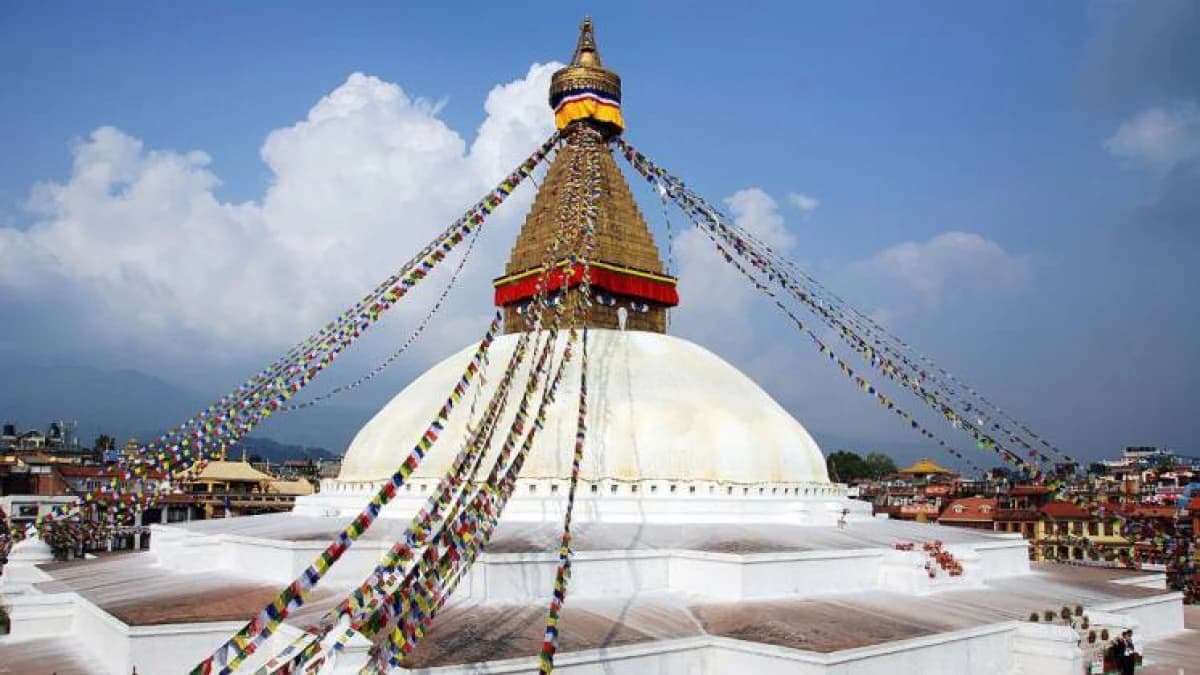
Boudhanath is the largest spherical stupa in Nepal, located in Boudha, approximately 11 km (6.8 mi) from the center and northeastern outskirts of Kathmandu. Boudha was named after the establishment of the Boudhanath stupa. As of 1979, Boudhanath is a UNESCO World Heritage Site. Along with Swayambhunath, it is one of the most popular tourist sites in the Kathmandu area. Surrounded by hills, Boudhanath Stupa is a jewel point in the center of a natural mandala, a store of sacred energy. It is the center of Tibetan culture in Kathmandu and is rich in Buddhist symbolism.
The stupa was one of the famous trade routes from Tibet to enter Kathmandu Valley through the village of Sankhu ( one of the famous holy places for Hindus). Tibetan merchants have rested and offered prayers here for many centuries. When refugees entered Nepal from Tibet in the 1950s, many decided to live around Boudhanath. There are many Tibetans living around Boudhanath and Boudha at present. The splendid dome of the Budhanath stupa is approximately 120ft in diameter and 43m in height. The square tower is topped by a pyramid with 13 steps, representing the ladder to enlightenment. Prayer flags tied to the stupa flutter in the wind, carrying mantras and prayers heavenward. A thick layer of whitewash coats the dome, and the form of a double lotus is depicted in saffron watercolors on it. Beneath the dome is an added terrace with a remarkable 108 niches filled with stone sculpture. And on the base of the stupa, there are three large circular platforms in descending order, which symbolize the earth. You can look around from there while listening to the chants of the devout doing kora, walking around the stupa, and praying. Doing Kora in a clockwise direction, turning the Mani wheels fixed in the surrounding wall, and reciting mantras of the deity of compassion, usually preceded and concluded in prayer to the three jewels, and is said to be most effective at dawn or dusk. The 10th, 15th, and final day of the lunar month, and various specific auspicious festival days. It is during these occasions that the Boudhanath is said to be truly alive.
History
There are many stories and legends about the origin of the stupa. However, according to “Hidden Treasure of the Guru Padmasambhava”, a very poor poultry keeper widow named Ma Jhyazima aspired to make a great offering to the Buddha. She requested the land from the local king for permission, and it was granted. This mere woman’s ambition to build such a magnificent monument offering to the Boudha caused much jealousy between the rich and powerful at the time. The jealous lord petitioned the king to stop the construction, but the king, who had already given permission, replied: “Since permission to build has been given, it shall not be rescinded.” The woman passed away after completing the base or dome-like structure. And her four sons completed the rest of the stupa. They all stood in front of the stupa and prayed for their wish. They all had different wish and all their wishes were really fulfilled in their next life. You can search the whole story about this and read it on the internet. Later on, the stupa was renovated by different kings in their period, and now at present.
Boudhanath is mostly regarded as for wish full filling. There are many true stories of people from different countries doing Kora and making a wish; they have really succeeded in their wish. When you see the stupa for the first time, whatever you pray for, it will succeed. When you are interested in visiting Nepal, don’t forget to visit Boudhanath Stupa. It’s about 3 km from Tribhuwan International Airport, Kathmandu. You can contact Touch Kailash Travels and Tours to make your visit more efficient, comfortable and mesmerizing. We can arrange wonderful tours and sightseeing all over Nepal, along with Tibet, Bhutan, and India, as per the client's needs.